

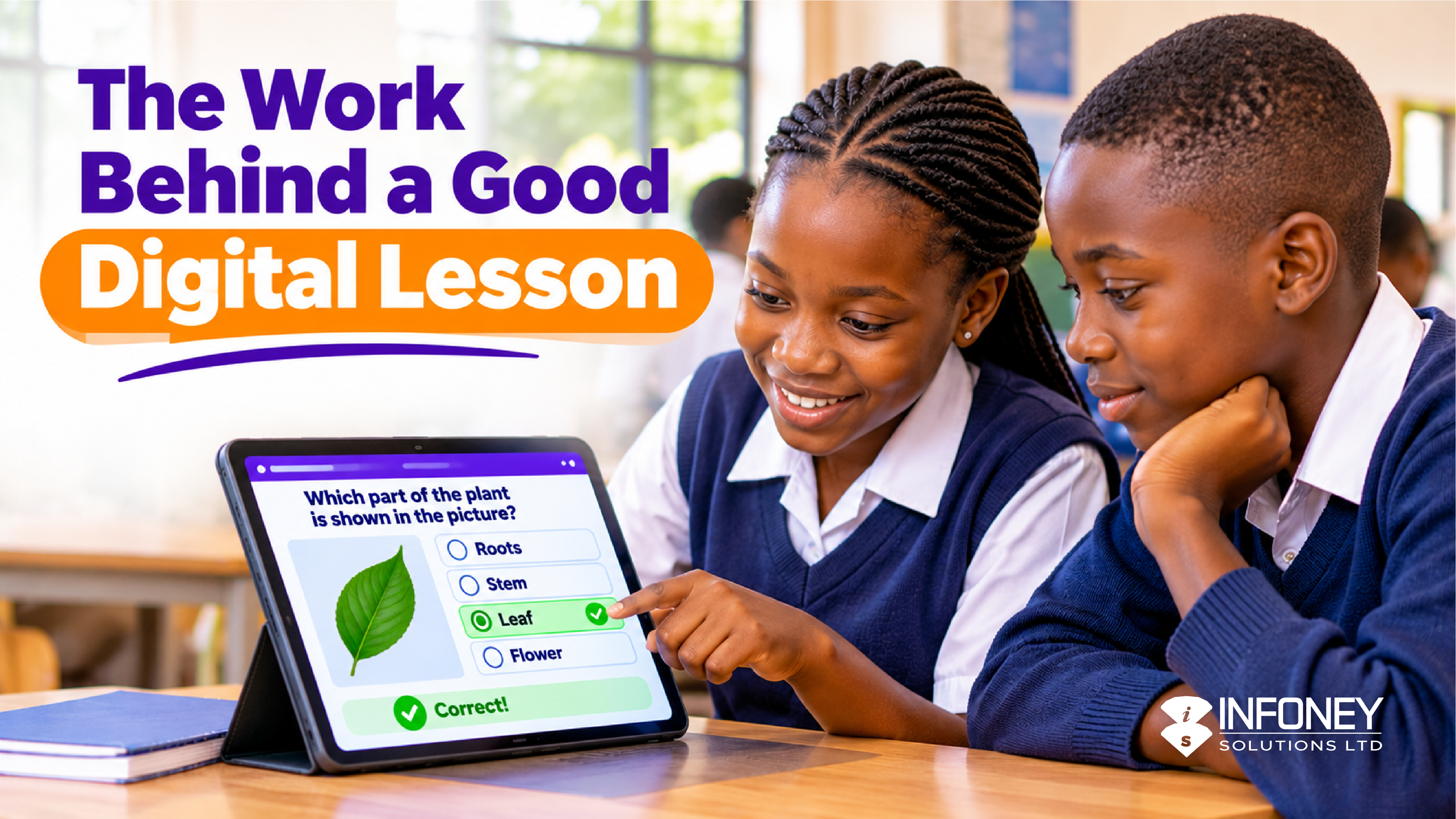
The Work Behind a Good Digital Lesson
Digital learning has become an increasingly important part of modern education.
From interactive activities to digital assessments, technology is creating new ways for learners to access information and engage with classroom content.
On the other hand, making educational content available digitally does not guarantee effective learning. The content needs to be carefully developed to ensure it is relevant, easy to understand and provides learners with meaningful opportunities to engage with what they are learning.
With that in mind, what makes educational content effective?
Alignment with Learning Objectives
Every effective lesson should have a clear learning purpose. Before developing digital content, it is important to identify what learners should know, understand or be able to do by the end of the lesson.
This means ensuring that the content, explanations, examples and activities support specific learning objectives and align with the curriculum.
For instance, a lesson on the human respiratory system should go beyond naming the different organs. It should also help learners understand how these organs work together during breathing.
Content Designed for Each Learner
Learners have different levels of understanding, abilities and learning needs, depending on their age and educational stage. This makes it important to develop content that is appropriate for the intended audience.
For younger learners, simple language, colorful illustrations and short activities can make concepts easier to follow. Older learners may benefit from more detailed explanations, practical applications and activities that encourage critical thinking.
In addition, effective digital lessons organize content into manageable sections, allowing learners to build their understanding progressively.
Meaningful Interactivity
Instead of only reading explanations or watching videos, learners can participate in activities that require them to think, make decisions and apply their knowledge.
For example, matching activities can help learners connect related concepts, sorting exercises can help them organize information, while simulations can demonstrate processes that may be difficult to observe in a traditional classroom.
However, interactivity should always serve a learning purpose. An activity should reinforce a concept, test understanding or give learners an opportunity to practice a particular skill.
Clear Instructions and Meaningful Feedback
Feedback is equally important. When learners answer questions or complete activities, they should receive information that helps them understand their performance.
Correct feedback reinforces what they have understood, while constructive guidance after an incorrect response can help them recognize mistakes and try again.
This makes activities more meaningful by turning mistakes into opportunities for learning rather than simply marking answers as right or wrong.
A Balance Between Visuals and Text
A good digital lesson uses visuals and text in ways that complement each other and support understanding.
Illustrations, diagrams, animations and labelled images can help learners connect written explanations with what they are studying.
For example, an animated demonstration of how the respiratory system works can make the breathing process easier to follow than a lengthy written explanation alone.
However, visuals should be relevant and purposeful. Too many decorative elements, unnecessary animations or excessive text can distract learners from the main concept.
Opportunities to Practice and Apply Knowledge
Digital lessons should incorporate quizzes, problem-solving exercises, puzzles and practical scenarios that encourage learners to apply their knowledge and understanding.
For example, after learning about environmental conservation, learners could complete an activity that requires them to identify appropriate ways of protecting their surroundings.
These allows educators to assess learners’ understanding and identify areas where they may need additional support.
READ Also: How Interactive Simulations Make Science Easier to Understand
Creating Digital Content with Learning at the Centre
Ultimately, a good digital lesson is not defined by how many features it contains, but by how effective it enables learners understand, practice and apply what they have learnt.
Effective digital educational content does not happen by simply transferring textbook information onto a screen. It requires careful consideration of learning objectives, learner needs, instructional design and the activities that will help learners engage with concepts.
As schools continue to incorporate technology into education, the focus should remain on the quality and educational value of the content being delivered.