

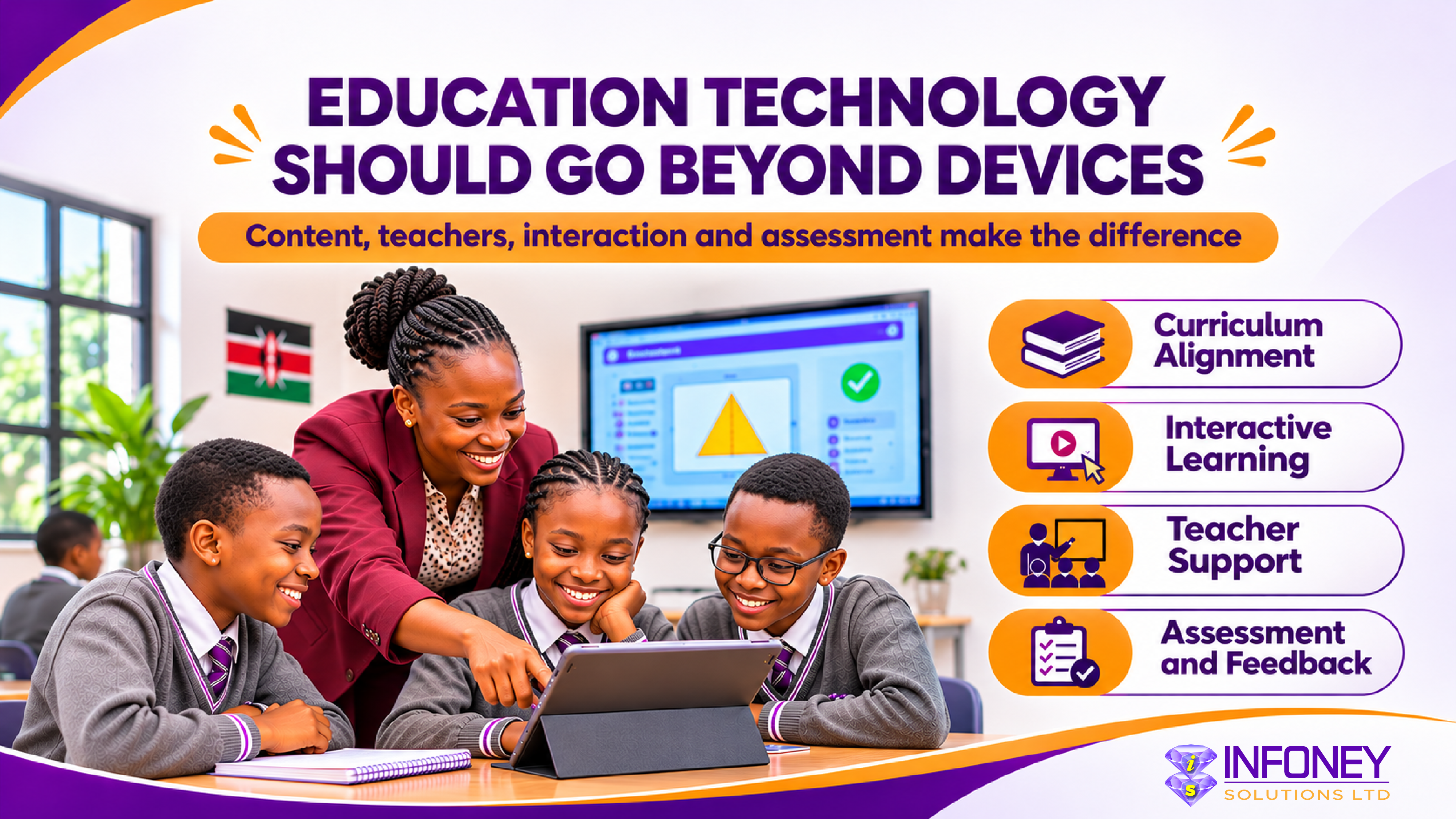
Education Technology Should Go Beyond Devices
Education technology is becoming an increasingly important part of how learners access information, practice skills and interact with educational content.
From digital learning applications to interactive classroom resources, technology offers opportunities to make learning more engaging and accessible. However, introducing technology into a school does not automatically improve learning outcomes. In some instances, devices can remain underused, teachers may struggle to integrate digital tools into their lessons, and learners may access content that does not adequately support what they are expected to learn.
The real challenge is not simply bringing technology into classrooms. It is ensuring that technology serves a clear educational purpose.
The Role of Technology in Kenya’s Education Goals
Kenya continues to pursue the integration of ICT into education as part of its broader education priorities. Under the Competency-Based Education (CBE) system, learning focuses on developing knowledge, skills, values and competencies that learners can apply in different situations. It also emphasizes digital literacy, equipping learners with the ability to use technology confidently, responsibly and effectively.
This ambition also aligns with SDG 4, which seeks to ensure inclusive and equitable quality education and promote lifelong learning opportunities for all by 2030.
These education goals highlight the importance of using technology to support meaningful learning. However, achieving this requires more than providing schools with digital devices. It calls for relevant content, prepared teachers, curriculum alignment and reliable technical support.
This is where thoughtful education technology implementation becomes essential. Schools must look beyond the devices they acquire and consider the curriculum, content, people and support systems that make digital learning useful.
Aligning Technology with the Curriculum
Every learning activity should have a purpose. When schools introduce digital learning tools, the first consideration should be whether they support the learning objectives and curriculum requirements.
A digital platform may offer attractive visuals and engaging activities, but these features have limited educational value if they do not reinforce what learners are studying.
Curriculum alignment ensures that digital lessons, exercises and assessments complement classroom instruction.
For example, after introducing a mathematics concept, a teacher could use a digital exercise to help learners practice solving related problems. This allows technology to reinforce what has already been taught while giving learners an opportunity to apply their understanding.
Making Learning Interactive
Successful digital learning is not simply about moving learning materials from printed pages to a screen. Doing so does not necessarily change how learners engage with information.
Interactive learning creates opportunities for learners to answer questions, solve problems, match concepts, complete exercises and receive instant feedback. These activities encourage learners to engage actively with the material rather than simply consume information.
Digital learning applications such as the KlickIt Education Learning App offer an example of this approach through interactive activities, quizzes, puzzles and educational games that encourage learners to participate in the learning process.
Preparing Teachers to Use Technology Effectively
Even with well-designed, interactive digital content, successful implementation depends on the people using these tools. Teachers play a central role in ensuring that technology supports learning.
Introducing a new digital tool without preparing teachers to use it can limit its effectiveness. Even a useful platform may remain underused if educators lack the confidence or practical skills to integrate it into their lessons.
When teachers understand how digital tools support their teaching, they can make better decisions about when and how to use them to improve learning experiences.
READ Also: Keep Your Child Learning This Holiday with Klickit Education
Using Assessment and Feedback to Support Learning
Assessment is another important part of effective digital learning. It helps teachers understand whether learners are grasping concepts and identify areas that may require additional attention.
Digital assessments, including quizzes and interactive exercises, give learners opportunities to test their understanding as they progress through a topic. Instant feedback can also help them recognize mistakes, understand correct responses and improve their performance.
For teachers, assessment results can provide useful insights into learners’ progress and areas where further explanation or practice may be needed.
Making Education Technology Effective
Education technology has the potential to make learning more engaging, accessible and effective. However, achieving these benefits requires more than simply introducing devices into schools.
Successful implementation requires curriculum-aligned content, interactive learning experiences, teachers who are equipped to use digital tools, meaningful assessment and reliable technical support.
Interactive digital learning applications such as the KlickIt Education Learning App contribute to this process by providing resources that complement classroom teaching and give learners additional opportunities to practice.
Download the Android version and Windows version of the KlickIt Education Learning App.