


KNEC Digital Assessments: Rollout Timeline, Risks, Readiness, and the Future of Learning
Estimated reading time: 7 minutes
Kenya’s education sector is entering a transformative phase as the Kenya National Examinations Council (KNEC) accelerates the rollout of digital assessments across the country. The move toward technology-enabled examinations is expected to redefine how learners are assessed, how schools prepare candidates, and how education institutions manage examination processes.
Digital assessment is no longer a future concept in Kenya. It is quickly becoming a national reality. Over the last few years, KNEC has progressively introduced electronic systems for registration, assessment management, e-marking, and teacher education examinations. With plans already underway to pilot senior school digital summative assessments, schools, parents, teachers, and learners must begin preparing for a fully digitized examination environment.
The transition is part of the broader shift toward Competency-Based Education (CBE), where assessment goes beyond memorization and increasingly focuses on practical competencies, digital literacy, problem-solving, creativity, and real-world application of skills.
This article explores the rollout of KNEC digital assessments in Kenya, the expected timelines, technical requirements, opportunities, challenges, and how schools can strategically prepare learners for the new era of online examinations.
What Are KNEC Digital Assessments?
KNEC digital assessments refer to examinations and assessment processes delivered, managed, processed, or marked through digital technologies rather than traditional paper-based systems.
The digital assessment ecosystem includes:
- Online examination delivery
- Computer-based testing (CBT)
- Digital learner registration
- E-marking systems
- Assessment analytics and reporting
- Secure candidate authentication
- Assessment management portals
- School-based assessment submissions
- Digital invigilation and monitoring
- Secure browser technology for exams
The transition is not limited to simply replacing paper with computers. Instead, it represents a complete modernization of Kenya’s national assessment infrastructure.

A major milestone in advancing quality education in Kenya.
Ambassador Prof. Julius Kibet Bitok,(left) Principal Secretary for the State Department for Basic Education, during the official launch of the Educational Assessment Resource Centre (EARC) at the new Mitihani House.
KNEC has already demonstrated significant progress through the implementation of electronic systems such as:
- Kenya Assessment Management System (KAMS)
- KNEC E-Assessment System (KEAS)
- E-marking for teacher education examinations
- Digital registration systems
- Candidate management portals
These developments indicate that KNEC is building a long-term digital examination framework rather than conducting isolated pilots.
KNEC Digital Assessment Rollout Timeline
One of the most important developments is the planned pilot of senior school digital summative assessments expected to begin in 2027.
This aligns with KNEC’s broader 2023–2027 strategic direction, which emphasizes:
- Digital transformation in assessment
- Technology-enabled examination systems
- Modernization of examination management
- Data-driven assessment systems
- Expansion of digital infrastructure
- Enhanced efficiency in examination processing
The phased approach is particularly important because digital examinations require extensive infrastructure, training, testing, and stakeholder confidence.
Global education systems that have successfully implemented online assessments have generally adopted gradual rollouts, beginning with lower-risk assessments before moving into high-stakes national examinations.
Kenya appears to be following a similar model.
Why Kenya Is Moving Toward Digital Assessments
The shift toward online examinations is driven by several key factors.
1. Improving Efficiency in Examination Management
Traditional paper-based examinations involve enormous logistical challenges including:
- Printing costs
- Distribution risks
- Manual processing
- Physical storage
- Transportation security
- Delayed results processing
Digital assessments can significantly reduce operational inefficiencies while improving processing speed.
2. Supporting Competency-Based Education (CBE)
The Competency-Based Curriculum requires more dynamic and skills-oriented assessment approaches.
Digital systems make it easier to assess:
- Problem-solving skills
- Simulations
- Interactive learning tasks
- Digital literacy competencies
- Practical applications
- Project-based learning
3. Enhancing Data-Driven Decision Making
Digital assessments generate detailed learner performance analytics.
This enables:
- Personalized intervention strategies
- Improved instructional planning
- Better curriculum evaluation
- Faster identification of learning gaps
- More accurate learner tracking
4. Preparing Learners for a Digital Economy
Kenya’s future workforce will require strong digital competencies.
By integrating technology into assessment, learners become more comfortable with:
- Digital tools
- Online systems
- Structured digital tasks
- Computer-based workflows
- Technology-driven environments
Technical Requirements for KNEC Digital Assessments
For schools to successfully participate in online assessments, several technical requirements will likely become essential.
1. Reliable Devices
Schools will need adequate digital devices such as:
- Desktop computers
- Laptops
- Tablets
- Thin-client systems
The devices must be capable of supporting secure examination environments.
2. Stable Internet Connectivity
Although some systems may support offline synchronization, reliable internet access will remain critical for:
- Authentication
- Data synchronization
- Reporting
- Monitoring
- Secure communication
3. Power Backup Systems
One of the biggest concerns in digital assessment implementation is power reliability.
Schools may increasingly require:
- Backup generators
- Solar systems
- UPS systems
- Battery backup infrastructure
4. Secure Examination Browsers
KNEC has already referenced secure browser technologies such as Safe Exam Browser.
These tools help prevent:
- Unauthorized internet access
- Screen switching
- External communication
- Access to stored files during exams
5. Candidate Authentication Systems
Digital assessments require strong identity verification systems to reduce impersonation risks.
Possible methods include:
- Candidate credentials
- Unique assessment numbers
- Biometric verification
- School authentication protocols
6. Technical Support Readiness
Schools will need:
- ICT support teams
- System troubleshooting procedures
- Device maintenance plans
- Examination contingency plans
Possible Major Challenges to Face Digital Assessments in Kenya
While digital assessments present major opportunities, the transition also introduces significant challenges.
1. Digital Divide and Equity Concerns
Not all schools currently have equal access to:
- Devices
- Reliable electricity
- High-speed internet
- ICT-trained teachers
- Technical support staff
Without proper interventions, digital assessments could widen educational inequality.
2. Infrastructure Gaps
Many schools still struggle with:
- Limited computer labs
- Poor internet connectivity
- Inadequate power systems
- Insufficient ICT resources
Rural and underserved regions may face the greatest implementation barriers.
3. Cybersecurity Risks
Digital assessments increase exposure to:
- System hacking
- Data breaches
- Candidate impersonation
- Device tampering
- Examination malpractice through technology
Strong cybersecurity frameworks will be essential.
4. Teacher and Learner Readiness
Successful digital assessment implementation depends heavily on user confidence.
Many learners and teachers still require:
- Digital literacy training
- Familiarity with online testing systems
- Practical experience with secure exam environments
- Confidence in navigating technology under examination pressure
5. Cost of Implementation
Transitioning to digital assessment requires substantial investment in:
- Infrastructure
- Devices
- Training
- Software systems
- Technical support
- Security systems
How Schools Can Prepare for KNEC Digital Assessments
Schools that begin preparation early will have a major advantage once digital assessments become fully operational.
Build a Strong Digital Learning Culture
Digital readiness should not start during examination periods.
Learners should regularly engage with:
- Online quizzes
- Digital assignments
- Interactive lessons
- Computer-based assessments
- Educational simulations
This reduces anxiety and improves familiarity with digital environments.
Invest in ICT Infrastructure

Empowering digital learning at St. Martins Kibagare – Kangemi as learners engage in interactive lessons using a modern computer lab equipped with computers and an interactive smart board.
Schools should progressively strengthen:
- Device availability
- Internet connectivity
- Classroom technology
- Power backup systems
- ICT maintenance support
Train Teachers Continuously
Teachers must become confident in:
- Digital teaching methodologies
- Online assessment systems
- Learner performance analytics
- Digital classroom management
Conduct Internal Digital Assessments
Schools can begin running:
- Mock digital exams
- Internal CBT assessments
- Timed online tests
- Digital revision sessions
This helps identify weaknesses before national implementation.
The Role of Digital Learning Platforms in Exam Readiness
As Kenya moves toward digital assessment, educational technology platforms will play an increasingly important role in preparing learners.
Platforms such as the KlickIt Education platform are already helping schools transition toward digital learning and assessment environments.
Interactive learning systems expose learners to:
- Digital quizzes
- Auto-marked assessments
- Timed examinations
- Performance tracking dashboards
- Gamified learning activities
- Interactive simulations
- Computer-based learning environments
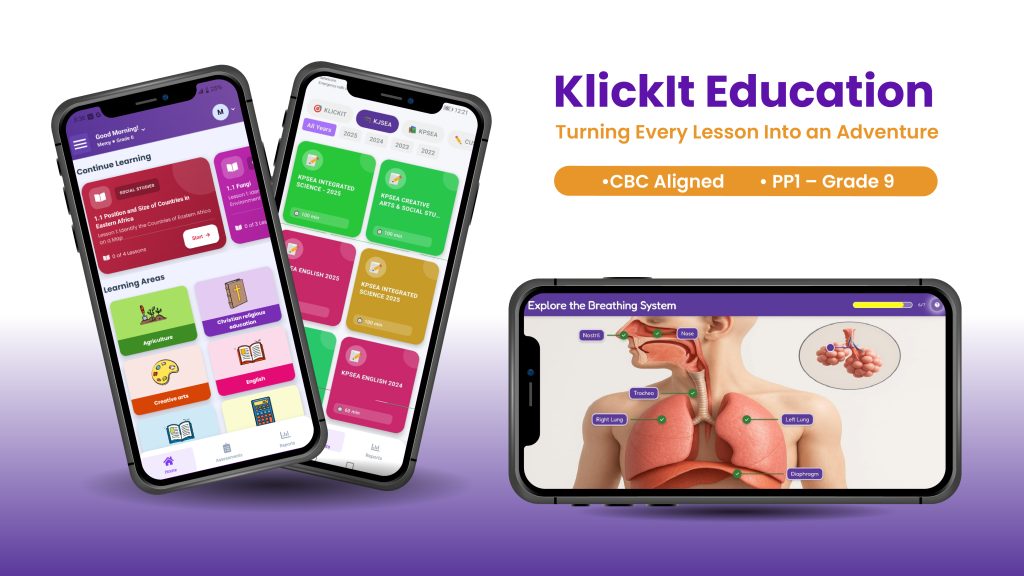
These experiences help learners build confidence with technology long before they encounter national digital examinations.
Digital learning platforms also help teachers monitor learner progress more effectively through real-time analytics and performance insights.
For schools, this creates a smoother transition into KNEC’s evolving digital assessment ecosystem.
Conclusion
KNEC digital assessments are set to become one of the most significant transformations in Kenya’s education sector.
The shift toward online examinations reflects broader changes in education, workforce demands, digital literacy, and competency-based learning.
Although challenges such as infrastructure gaps, digital inequality, cybersecurity, and training requirements remain significant, the direction is clear: digital assessment is becoming an integral part of Kenya’s future education system.
Schools, teachers, parents, and learners who begin preparing early will be better positioned to succeed in this evolving environment.
Institutions that will invest in digital readiness today will not only improve examination preparedness but also strengthen overall teaching, learning, and educational outcomes.
The future of assessment in Kenya is digital and the transition has already begun.
Download Now: