

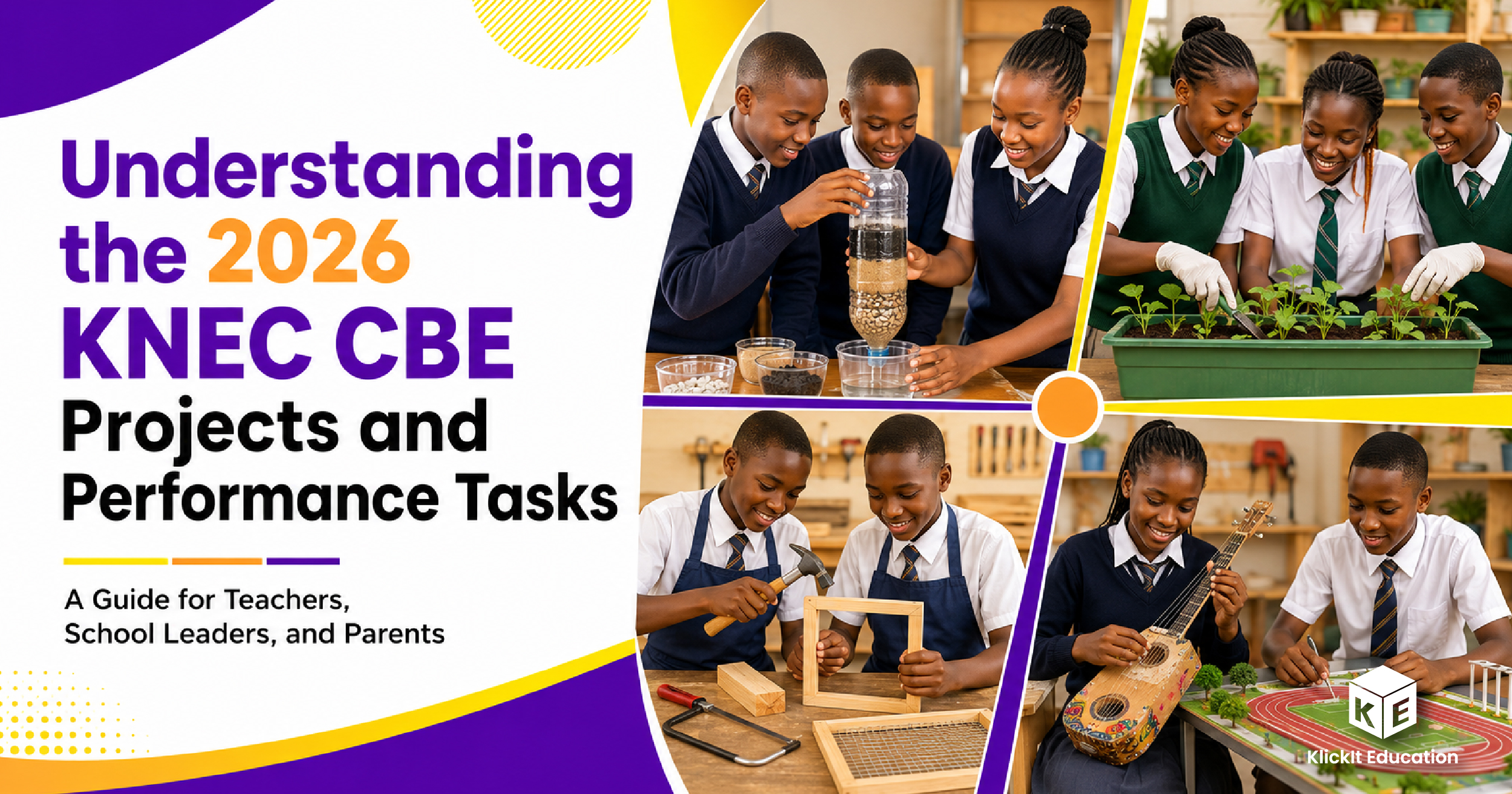
Understanding the 2026 KNEC CBE Projects and Performance Tasks: A Guide for Teachers, School Leaders, and Parents
Estimated reading time: 7 minutes
Kenya’s education system is undergoing one of the most significant transformations in its history.
With the continued implementation of Competency-Based Education (CBE), learning is steadily shifting away from memorization and examination-centered instruction toward practical skills, competency development, creativity, and real-world problem-solving.
One of the clearest indicators of this transition is the growing importance of KNEC School-Based Assessments (SBA), projects, and performance tasks across upper primary and junior school levels.
In 2026, the Kenya National Examinations Council (KNEC) released official schedules and implementation timelines for projects and performance tasks from Grade 4 to Grade 9. These assessments are no longer supplementary classroom activities. They are becoming a central component of learner evaluation, competency profiling, and future pathway placement.
For teachers, school managers, and parents, understanding how these assessments work and how to support learners effectively, is now more important than ever.
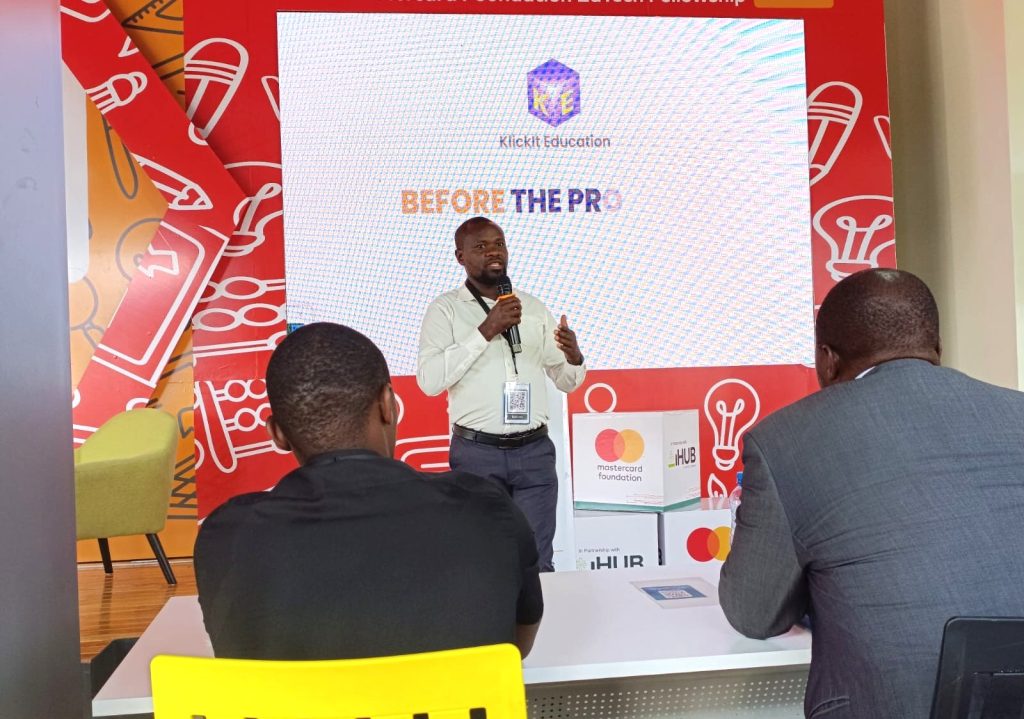
The future learner in Kenya will not only be assessed on what they know, but also on what they can do. – Jonah Wanjohi, speaking during the launch of Klickit Education at iHub.
Why These Projects Matter in the CBE Curriculum
Unlike the previous 8-4-4 system that focused heavily on written examinations, CBE emphasizes:
- Practical application of knowledge
- Creativity and innovation
- Problem-solving
- Communication and collaboration
- Talent identification
- Real-life skills development
The projects and performance tasks help KNEC assess whether learners can apply what they learn in class to real-world situations.
Under the CBC/CBE structure:
- Grade 4–5 projects build foundational competencies.
- Grade 7–8 performance tasks strengthen practical and analytical skills.
- Grade 9 KJSEA projects contribute directly to Senior School placement pathways.
These assessments therefore play a major role in:
- Learner progression
- Competency profiling
- Talent development
- Career pathway identification
- Transition into Senior School
2026 KNEC Projects and Performance Tasks Timeline
Grade 4 and Grade 5 Projects
Learning Areas
- Science & Technology
- Creative Arts & Sports
- Agriculture
Important Dates
| Activity | Date |
| Projects accessible on KNEC Portal | 2 March 2026 |
| Deadline for uploading scores | 29 May 2026 |
Grade 7 and Grade 8 Performance Tasks
Learning Areas
- Agriculture
- Creative Arts & Sports
- Integrated Science
Important Dates
| Activity | Date |
| Performance tasks accessible | 4 May 2026 |
| Deadline for uploading scores | 31 July 2026 |
Grade 9 KJSEA Projects
Learning Areas
- Creative Arts & Sports
- Agriculture
- Pre-Technical Studies
Important Dates
| Subject | Access Date | Upload Deadline |
| Creative Arts & Sports | 11 May 2026 | 30 August 2026 |
| Agriculture | 1 July 2026 | 30 August 2026 |
| Pre-Technical Studies | 1 July 2026 | 30 August 2026 |
Key Insight:
Grade 9 KJSEA projects now contribute directly to learner placement into Senior School pathways, making continuous assessment increasingly important in Kenya’s education system.
Breakdown of the Projects by Grade and Subject
Grade 4 Projects
At this level, projects mainly focus on observation, participation, creativity, and foundational practical skills.
Science & Technology
Learners may:
- Conduct simple experiments
- Observe weather changes
- Grow plants
- Create simple models
- Investigate environmental issues
Key Competencies Developed
- Creativity
- Problem-solving
Creative Arts & Sports
Tasks may include:
- Drawing and painting
- Singing and movement
- Craft work
- Physical activity demonstrations
Competencies Developed
- Self-Efficacy
- Creativity
- Collaboration
Agriculture
Learners may:
- Plant seeds
- Care for crops
- Identify farm tools
- Practice environmental conservation
At this level, learners are introduced to hands-on learning and practical engagement with their environment.
Grade 5 Projects
Grade 5 introduces more independence and analytical thinking.
Science & Technology
Possible tasks:
- Energy investigations
- Human body projects
- Magnet experiments
- Environmental conservation activities
Creative Arts & Sports
Learners may:
- Perform drama
- Compose music
- Design artworks
- Demonstrate sports skills
Agriculture
Projects may involve:
- Nursery establishment
- Pest identification
- Safe farming practices
- Crop management
At this stage, learners begin demonstrating stronger decision-making and practical application skills.
Grade 7 Performance Tasks
Junior School performance tasks are more structured and competency-driven.
Agriculture
Tasks may include:
- Soil testing
- Kitchen gardening
- Farm record keeping
- Food and nutrition activities
Integrated Science
Learners may conduct:
- Laboratory investigations
- Electricity experiments
- Environmental studies
- Measurement and data interpretation activities
Creative Arts & Sports
Possible tasks:
- Stage performances
- Music presentations
- Art portfolios
- Fitness demonstrations
These tasks are designed to identify talents, creativity, and learner interests early enough for pathway development.
Grade 8 Performance Tasks
Grade 8 assessments become more advanced and preparation-oriented toward Grade 9 KJSEA.
Agriculture
Learners may:
- Conduct crop production projects
- Perform food preparation practical
- Keep farm records
Integrated Science
Possible practical:
- Chemical change experiments
- Environmental investigations
- Energy studies
- Data analysis tasks
Creative Arts & Sports
Tasks may involve:
- Art exhibitions
- Music composition
- Sports demonstrations
- Group performances
Grade 8 is particularly important because learners begin building evidence toward future specialization pathways.
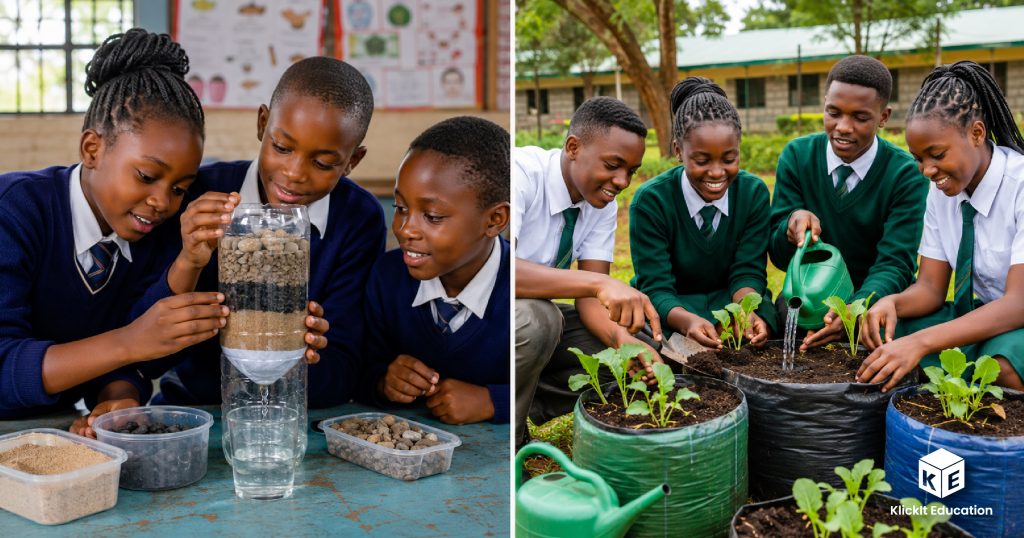
Learners undertaking practical Grade 6 Science & Technology and Grade 7 Agriculture & Nutrition projects under Kenya’s Competency-Based Education (CBE) curriculum, including water filtration, container gardening, and nursery bed management using locally available materials.
Grade 9 KJSEA Projects
These are national-level competency projects contributing directly to Junior School assessment outcomes and Senior School placement.
Creative Arts & Sports
Projects may involve:
- Artwork production
- Cultural performances
- Sports competency demonstrations
- Portfolio development
Duration:
- 3 months
Agriculture
Possible projects:
- Crop or livestock production
- Agribusiness activities
- Soil conservation
- Farm management
Learners are expected to document:
- Procedures
- Observations
- Outcomes
- Reflections
Pre-Technical Studies
Tasks may include:
- Product design
- Technical drawing
- Woodwork or metalwork
- Entrepreneurship activities
These projects strongly support STEM and Technical pathway identification under CBE.
How Teachers Can Support Learners
Teachers play the most critical role in guiding learners through these competency tasks.
1. Focus on Guidance, Not Answers: Teachers should:
- Facilitate understanding
- Demonstrate procedures
- Encourage independent thinking
The goal is competency development, not merely completing tasks.
2. Create Practice Opportunities: Schools should integrate:
- Mini practical activities
- Simulations
- Group activities
- Continuous formative assessments
This builds learner confidence before official projects.
3. Encourage Creativity: CBE rewards originality and problem-solving. Learners should be encouraged to:
- Innovate
- Use local materials
- Think critically
- Present ideas confidently
4. Maintain Assessment Evidence: KNEC requires schools to keep:
- Learner portfolios
- Photos
- Project records
- Assessment rubrics
- Scoring evidence
How School Managers Can Support Implementation
School leadership determines how smoothly these projects are conducted.
School Managers Should:
1. Ensure Early Planning: Avoid last-minute implementation by:
- Creating assessment calendars
- Allocating resources early
- Preparing materials in advance
2. Support Teachers: Schools should:
- Provide assessment materials
- Organize internal training
- Reduce unnecessary pressure during assessment periods
3. Strengthen ICT Readiness: Since scores are uploaded digitally through the KNEC CBA portal, schools need:
- Reliable internet access
- Functional ICT devices
- Staff trained on portal usage
4. Encourage Practical Learning Environments: Schools should create:
- Functional laboratories
- School gardens
- Art and creative spaces
- Practical learning environments
This aligns perfectly with the goals of competency-based education.
How Parents Can Support Learners
Parents are now an active part of learner success under CBE.
1. Provide Encouragement: Many learners experience anxiety during projects. Parents should:
- Encourage effort
- Celebrate progress
- Build learner confidence
2. Provide Simple Materials: Parents can help learners access:
- Locally available materials
- Art supplies
- Gardening tools
- Simple science resources
KNEC encourages the use of locally available materials where possible.
3. Allow Learners to Do the Work: One of the biggest mistakes is parents completing projects for learners.
The purpose of CBE assessment is to evaluate the learner’s competencies, creativity, and problem-solving ability. When adults do the projects, the learner loses the opportunity to develop essential skills.
4. Support Time Management: Parents can help learners:
- Create schedules
- Complete tasks gradually
- Avoid rushing near deadlines
The Future of Assessment in Kenya
The 2026 KNEC projects and performance tasks demonstrate that Kenya’s education system is increasingly moving towards:
- Skills-based learning
- Practical competencies
- Innovation
- Creativity
- Career pathway preparation
For schools, this means learning can no longer revolve around memorization alone. Learners must now demonstrate what they can actually do.
For parents and teachers, success under CBE requires collaboration, mentorship, and creating environments where learners can explore, experiment, and innovate confidently.
The future learner in Kenya will not only be examined on knowledge but also on creativity, adaptability, practical skills, and real-world problem-solving abilities.
Final Thought

The future of education in Kenya will likely be defined not only by examination performance, but also by how effectively learners develop competencies, creativity, adaptability, collaboration, and real-world problem-solving skills. The schools that invest early in practical learning, technology integration, and learner-centered teaching approaches may be better positioned for the next phase of educational transformation under CBE.
Jonah Wanjohi – Managing Director
Infoney Solutions Ltd