

Smart Classrooms for Junior Schools: Why Recently Launched Kenya’s Digital Literacy Programme Must Go Beyond Devices
Estimated reading time: 7 minutes
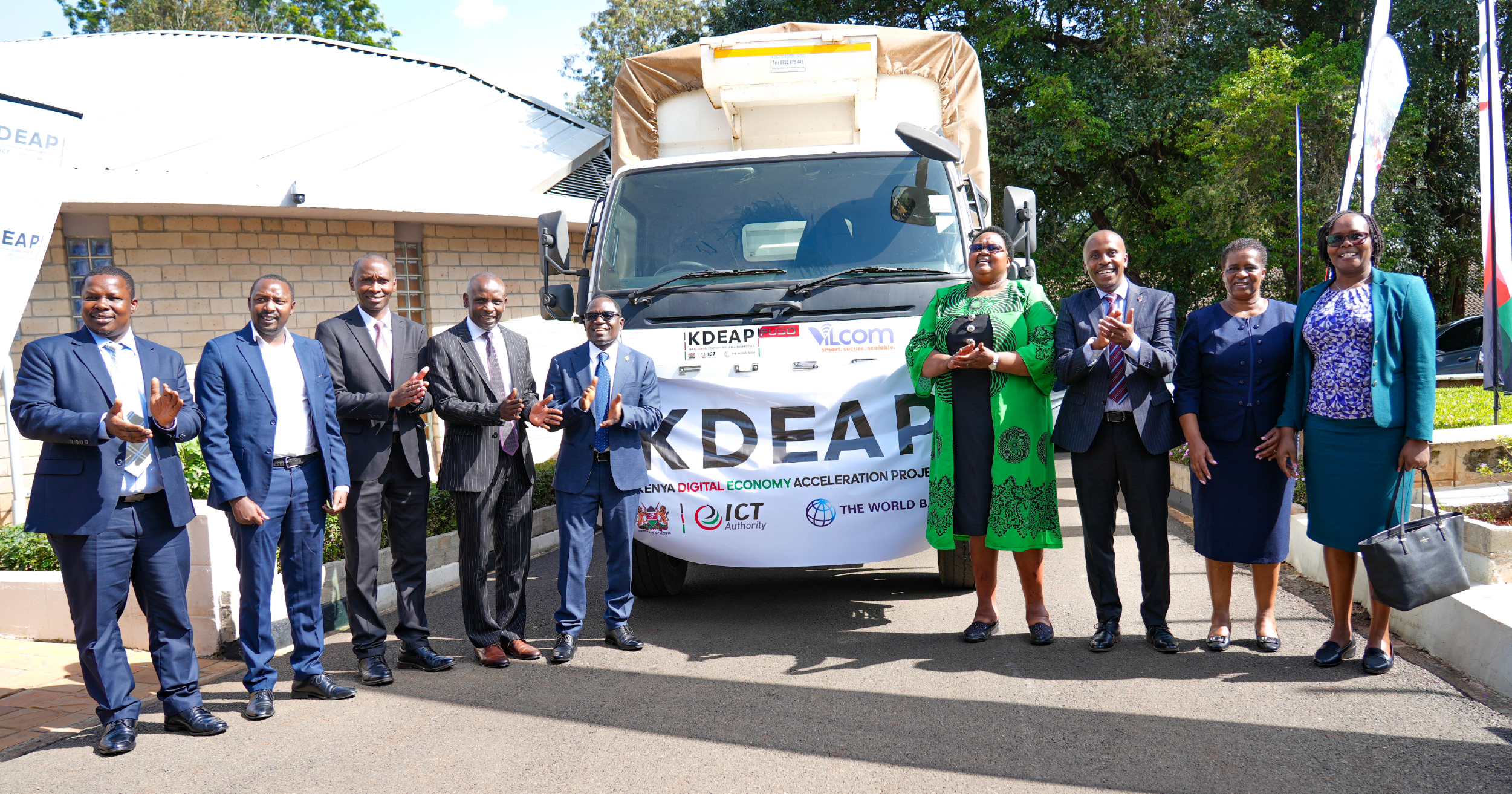
Kenya’s launch of the Digital Literacy Programme for public junior schools marks an important moment in the country’s education transformation journey. The programme is being implemented under the Kenya Digital Economy Acceleration Project, funded by the World Bank and led by the Ministry of Information, Communications and the Digital Economy through the ICT Authority. In the first phase, the programme targets 10,382 public junior schools across Kenya, with the rollout of interactive smartboards and teacher laptops aimed at enhancing digital learning and classroom engagement.
But the real question is this: Will smartboards and laptops automatically create smart classrooms?
The honest answer is no. Technology can open the door, but learning only happens when the right content, teacher capacity, curriculum alignment, assessment tools, and learner engagement strategies are built around that technology.
This is where platforms such as KlickIt Education can add enormous value.
The opportunity: From digital devices to digital learning
The Digital Literacy Programme is timely because Kenya’s junior school learners are at a stage where learning needs to become more practical, interactive, inquiry-based, and skills-oriented. The Competency-Based Curriculum calls for active learning, creativity, collaboration, problem-solving, digital literacy, and continuous assessment.
Interactive smartboards and laptops can support this shift, but only when teachers have access to rich digital learning materials that are easy to use in class.
A smartboard without relevant content is just a large screen. A laptop without structured lessons is just a device. A classroom with technology but no pedagogy becomes an expensive version of the old chalk-and-talk model.
For the Digital Literacy Programme to succeed, schools need platforms that help teachers deliver CBC-aligned content in a way that learners can see, touch, practise, respond to, and remember.
How KlickIt Education can add value to the Digital Literacy Programme
KlickIt Education can support the programme by bridging the gap between infrastructure and classroom impact. It can turn smartboards, laptops, tablets, and projectors into real teaching and learning tools.
1. Curriculum-aligned interactive content
Junior school teachers need content that is already aligned to Kenya’s curriculum. KlickIt Education can provide digital lessons across learning areas from Grade 1 to Grade 9, making it easier for teachers to integrate technology without spending endless hours searching for resources online.
This is important because teachers do not just need “digital content.” They need relevant, structured, age-appropriate, CBC-aligned learning materials that support lesson delivery and learner participation.
2. Better learner engagement
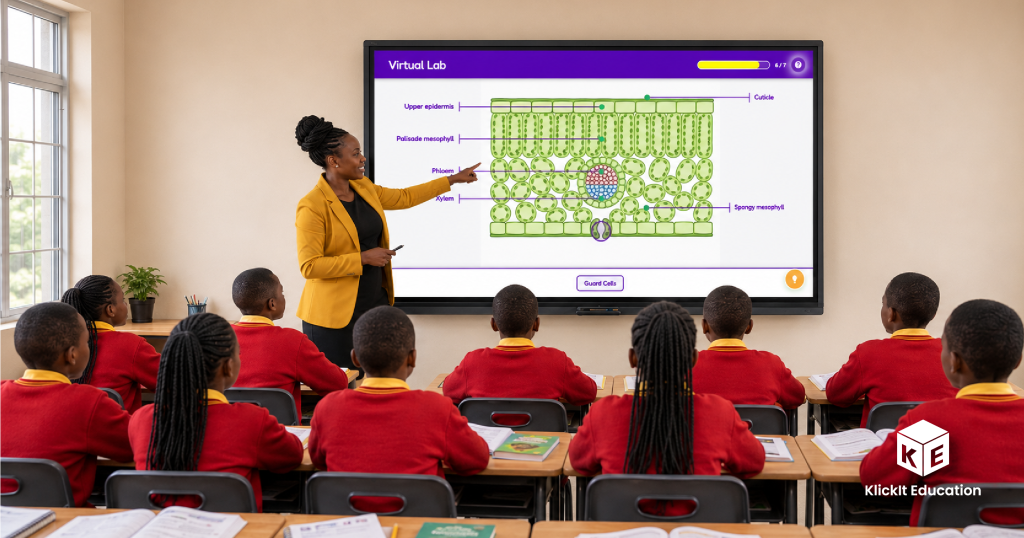
Today’s learners are growing up in a highly visual and interactive world. They respond better when learning includes animations, simulations, quizzes, games, drag-and-drop activities, virtual experiments, and instant feedback.
KlickIt’s interactive content can help teachers move from passive teaching to active learning. Instead of learners only listening, they can observe, predict, test, answer, match, classify, solve, revise, and get feedback.
That is where technology begins to transform learning.
3. Digital automated assessments
One of the biggest challenges in schools is assessment workload. Teachers spend a lot of time preparing tests, marking, recording scores, and identifying learner gaps.
KlickIt Education’s digital assessments can support teachers with automated quizzes, revision questions, learner progress tracking, and instant feedback. This allows teachers to quickly know which learners are struggling and which concepts need reteaching.
4. Support for revision and exam preparation
Junior school learners need regular revision, especially as the curriculum becomes broader and more demanding. KlickIt can support learning through past papers, revision questions, topical assessments, and learner practice activities.
This adds value to the national programme because devices become tools for continuous learning, not just occasional demonstrations.
5. Offline and online learning support
One major challenge in Kenya is connectivity. Many schools may receive devices before they have reliable internet, stable power, or sufficient technical support.
A platform that can work both online and offline is critical. KlickIt Education can help schools continue using digital content even in areas where internet access is limited or unstable.
Risks Kenya must avoid in the Digital Literacy Programme
1. Devices without relevant CBC content
If smartboards and laptops are delivered without enough curriculum-aligned content, teachers may struggle to use them meaningfully. The devices may be used for basic display, entertainment, or occasional demonstrations instead of structured teaching and learning.
2. Smartboards becoming “digital blackboards”
A smartboard should not simply replace a chalkboard. It should enable interaction, simulations, virtual labs, learner participation, digital notes, multimedia content, and assessment. Without interactive content, smartboards risk becoming expensive projection screens.
3. Teacher anxiety and low adoption
Many teachers are willing to use technology, but they need confidence, training, and continuous support. If teachers are given devices without proper onboarding, some may avoid using them or use them only minimally.
4. Poor maintenance and technical support
Devices need updates, repairs, security, storage, power management, and user support. Without a clear maintenance model, schools may end up with broken, outdated, or unused equipment.
5. Inequality between schools
Some schools may have strong leadership, reliable electricity, better connectivity, and tech-savvy teachers. Others may struggle. Without targeted support, the programme could widen the gap between well-resourced and underserved schools.
6. Lack of measurable learning outcomes
If success is measured only by the number of devices distributed, the programme may look successful on paper but fail in the classroom. The real measure should be improved learner engagement, teacher usage, assessment feedback, STEM participation, digital skills, and learning outcomes.
7. Screen time without learning value
Technology should be purposeful. If learners spend time on screens without guided learning objectives, the result may be distraction rather than progress. Recent debates in technology-rich classrooms globally show that schools are increasingly concerned about screen overuse, distractions, and the need for balance.
How to make the programme successful
1. Pair every device with curriculum-aligned digital content
Every smartboard and laptop should come with structured learning materials. Content should be mapped to CBC learning outcomes, grade levels, strands, sub-strands, and assessment expectations.
This is where partnerships with platforms like KlickIt Education can help schools move quickly from device ownership to classroom use.
2. Train teachers on digital pedagogy, not just device operation
Teachers should not only be trained on how to switch on a smartboard or open a laptop. They need training on how to teach using digital tools.
Training should cover lesson planning, interactive teaching, virtual labs, learner participation, assessment, inclusive learning, and classroom management in a digital environment.
3. Support local content development
Kenya should invest in locally relevant digital content that reflects the CBC, Kenyan contexts, African examples, local languages where appropriate, and the realities of Kenyan classrooms.
Imported content may be useful, but localised content will create stronger learner connection and better curriculum relevance.
4. Build a teacher support ecosystem
The programme should include help desks, school-based ICT champions, refresher training, peer learning communities, and continuous professional development.
A teacher who is supported will use technology. A teacher who is left alone may abandon it.
5. Ensure offline access
Connectivity should not become a barrier to digital learning. Content repositories, assessments, and interactive lessons should be accessible offline where internet is weak.
This will make the programme more inclusive, especially in rural and underserved areas.
6. Measure classroom impact, not just distribution
The government and partners should track indicators such as:
- Teacher usage frequency
- Learner participation levels
- Assessment completion rates
- Improvement in difficult learning areas
- Device uptime and maintenance
- Learner digital literacy growth
This will help the programme remain accountable to learning outcomes.
7. Involve Kenyan EdTech innovators
Kenya has local EdTech companies that understand the curriculum, school environment, teacher challenges, and learner needs. Bringing local innovators into the programme can accelerate adoption and ensure sustainability.
Platforms like KlickIt Education can complement government infrastructure by providing the content, assessments, interactivity, and school-level implementation support needed to make the programme practical.

Kenya’s Digital Literacy Programme is a major step in the right direction. The rollout of smartboards and laptops to junior schools can help bridge the digital divide, strengthen STEM learning, and prepare learners for a digital economy.
Jonah Wanjohi – Managing Director
But the programme will only succeed if the country remembers one key lesson:
Technology is not the destination. Learning is.
Infoney Solutions Ltd
Smart classrooms must be powered by smart content, confident teachers, relevant assessments, continuous support, and platforms that make learning interactive and meaningful.
KlickIt Education can play a valuable role in this journey by helping schools turn digital infrastructure into real classroom transformation.
Because in the end, the success of Kenya’s Digital Literacy Programme will not be judged by how many devices were delivered. It will be judged by how many learners understood better, participated more, practised more, performed better, and gained the digital skills needed for the future.